
The kitchens that always seem effortlessly put together usually have one thing in common: they’re hiding a lot more than you think. Once you look past the usual cupboards and shelves, you uncover all sorts of clever kitchen storage ideas you might not have considered before.
Concealed kitchen storage has become a go-to for anyone craving a calmer, more streamlined space. Whether it’s hidden larders that take the pressure off your worktops, secret drawers tucked into plinths or end panels that store more than you realise, these details might be discreet but they make everyday life much easier.
Below, we share some of the smartest hidden storage ideas kitchen designers rely on; plus we share the expert insight that makes them genuinely achievable in real homes.
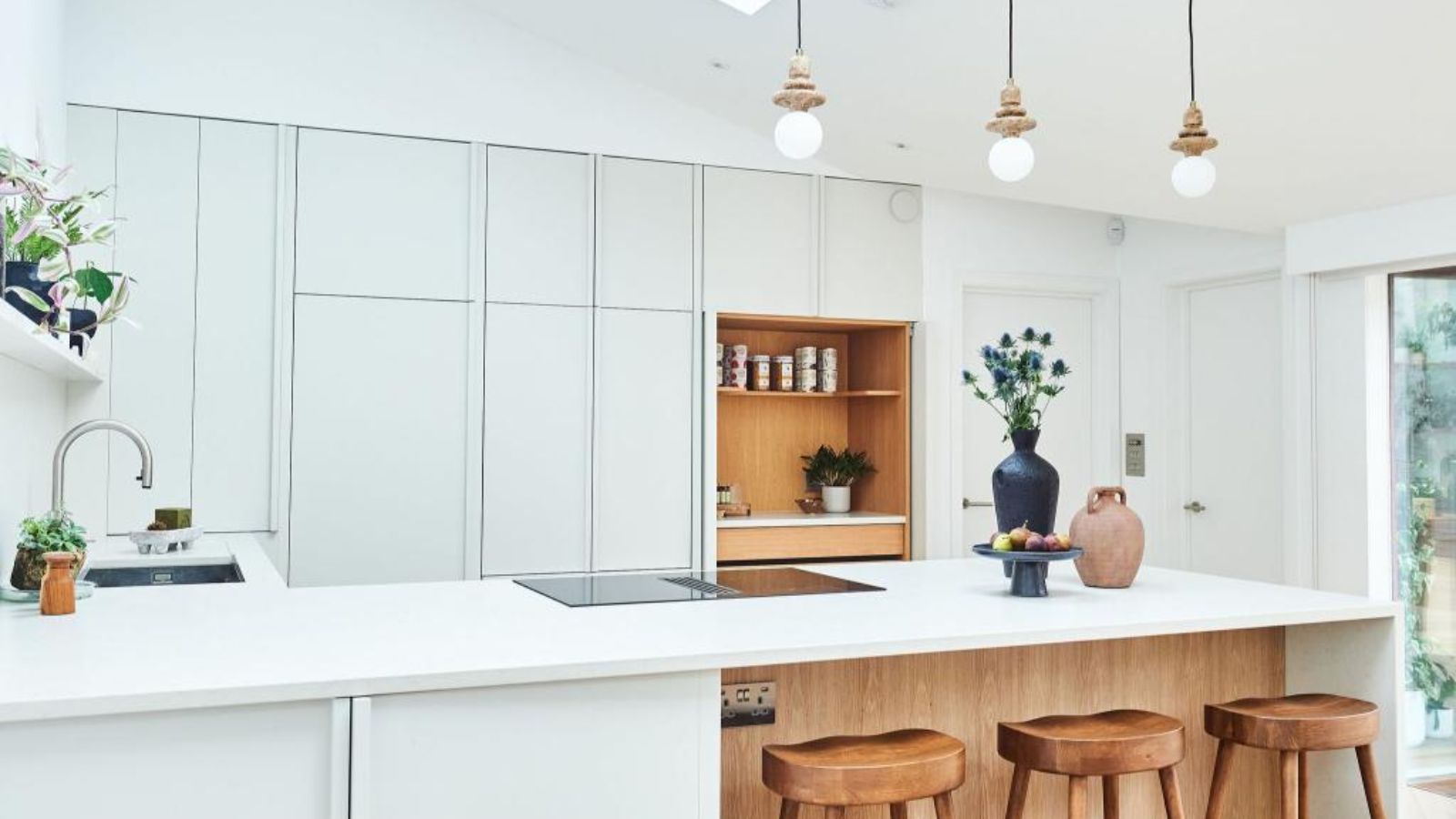
1. Conceal a breakfast pantry behind pocket doors
“Introducing hidden elements such as a breakfast pantry can make all the difference to your kitchen,” says Tom Howley, creative design director at the eponymous kitchen company. Designed to bring the entire morning routine into one beautifully organised ‘zone’, these secret cupboards can store everything from a home coffee station to your everyday essentials. And when the morning rush is over “you can close the doors behind you, concealing all the mess and clutter until it’s time to tidy,” Tom adds.
But the right types of door are essential for making these concealed cupboards work. As Emily Newmarch, design consultant at Kitchens by Holloways, puts it: “A well-designed breakfast larder is one of the most practical pieces of storage you can add to a kitchen, but pocket doors are essential as they allow the cupboard to remain fully open during busy mornings without obstructing walkways.”
“Sight lines are equally important,” she continues, “because pantry cupboards are usually placed within the main run of kitchen cabinetry, the goal is for them to visually disappear when closed, so cabinetry style and colour should match the rest of the kitchen for a seamless look.”
And Mike Biddulph, founder of Goldfinch Kitchens, agrees, adding: “The last thing you want is to add hidden storage to your kitchen only to find the doors don’t operate as smoothly as you imagined,” he explains. “There are plenty of options for hidden doors, such as push-to-open systems that maintain a truly minimal look, or traditional sliding doors that save on swing space. However, I almost always recommend pocket doors for a seamless finish that will preserve the magic of concealed storage. Ensuring the ergonomics and mechanics are right from the start will make the design feel effortless in everyday life.”

Tom has spent over 20 years designing kitchens that work around a client’s lifestyle, making him an expert on knowing just how to create a functional but beautiful space that meets your needs.

Emily Newmarch
Emily works as a design consultant for bespoke kitchens, bringing a clear sense of material, texture and proportion to each project.

Mike Biddulph is founder of Goldfinch Furniture, where he blends craftsmanship and social purpose, creating bespoke furniture while training young apprentices and championing ethical, made-in-Britain design.
2. Disguise a back kitchen, wine room or prep space within a run of cabinetry
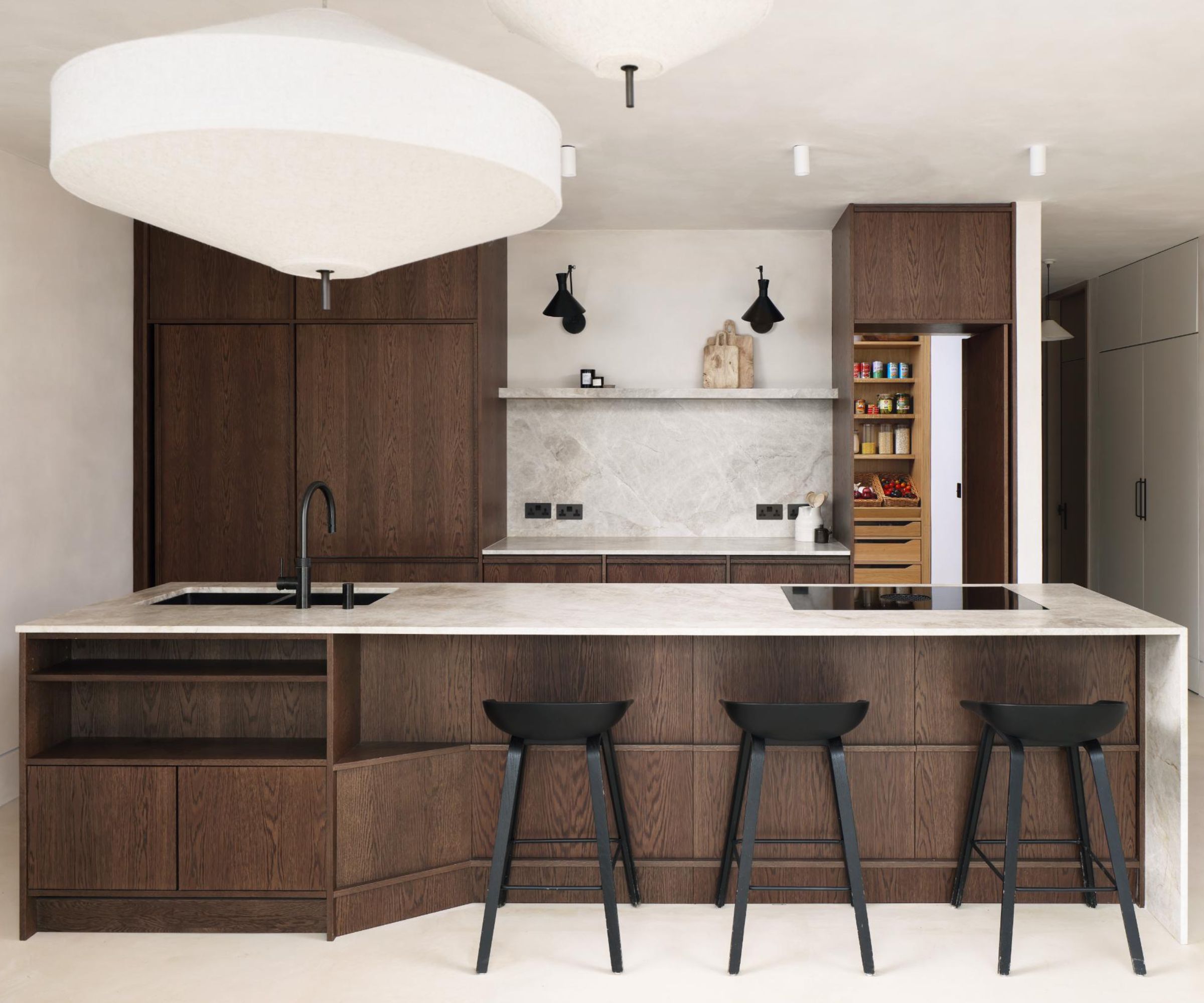
One of the most sophisticated ways to introduce concealed storage is to hide an entire working room behind what appears to be a simple run of cabinetry or wall panelling. Ran Ankory, managing director at Scenario Architecture, describes this approach as giving the everyday mess a proper home: “In our own house, one ‘cupboard’ door is actually a full working pantry and prep space with extra worktop, an additional sink, and generous storage,” he explains. “It means the main kitchen can stay social and clear while the real work, packaging, appliances and prep clutter lives out of sight.”
Much like hidden utility rooms, these secret back kitchen are becoming increasingly sought-after in modern kitchens. By tucking the functional tasks behind closed doors, the kitchen itself can shift between cooking, working and entertaining while still feeling put together.
Image 1 of 2
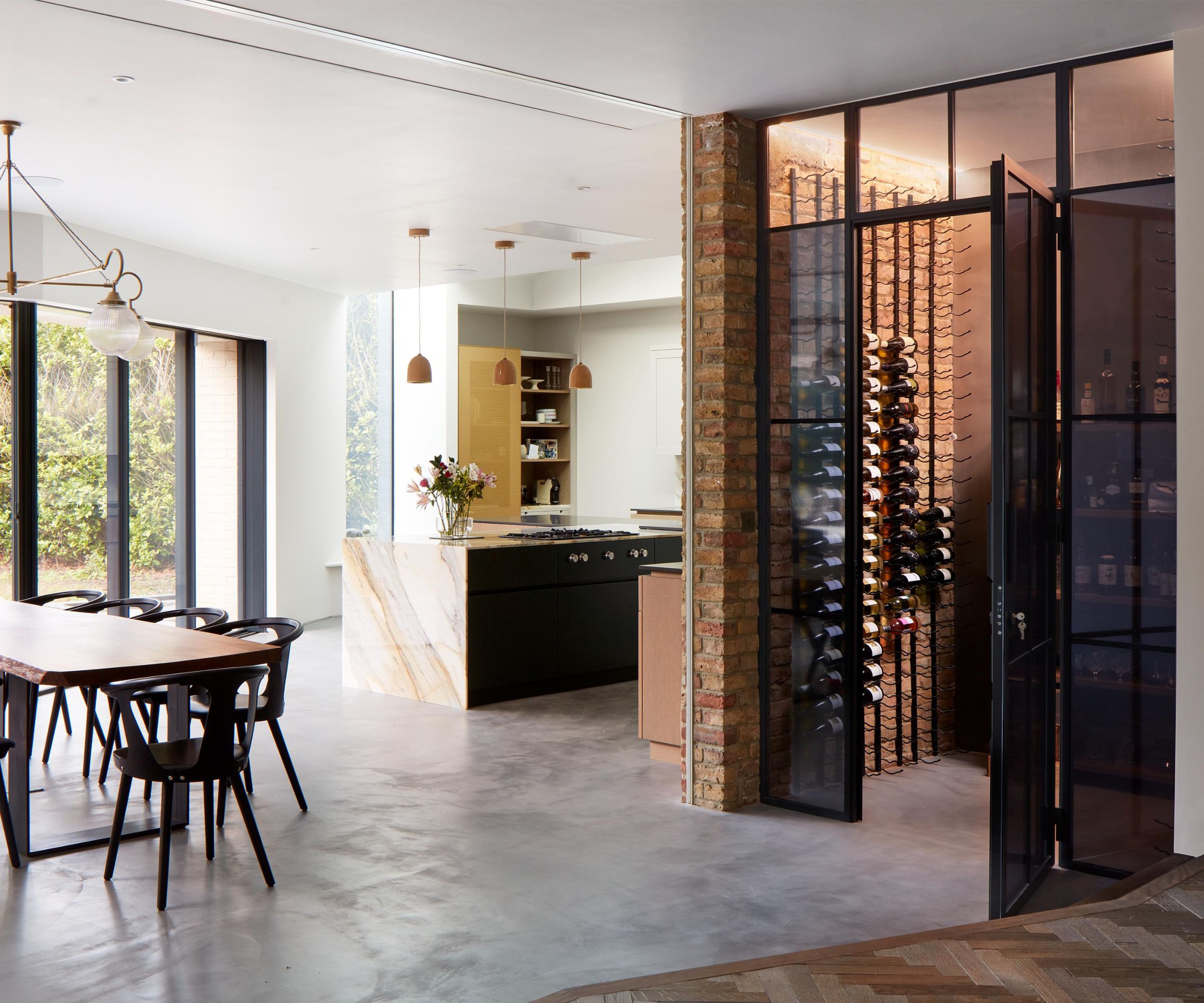
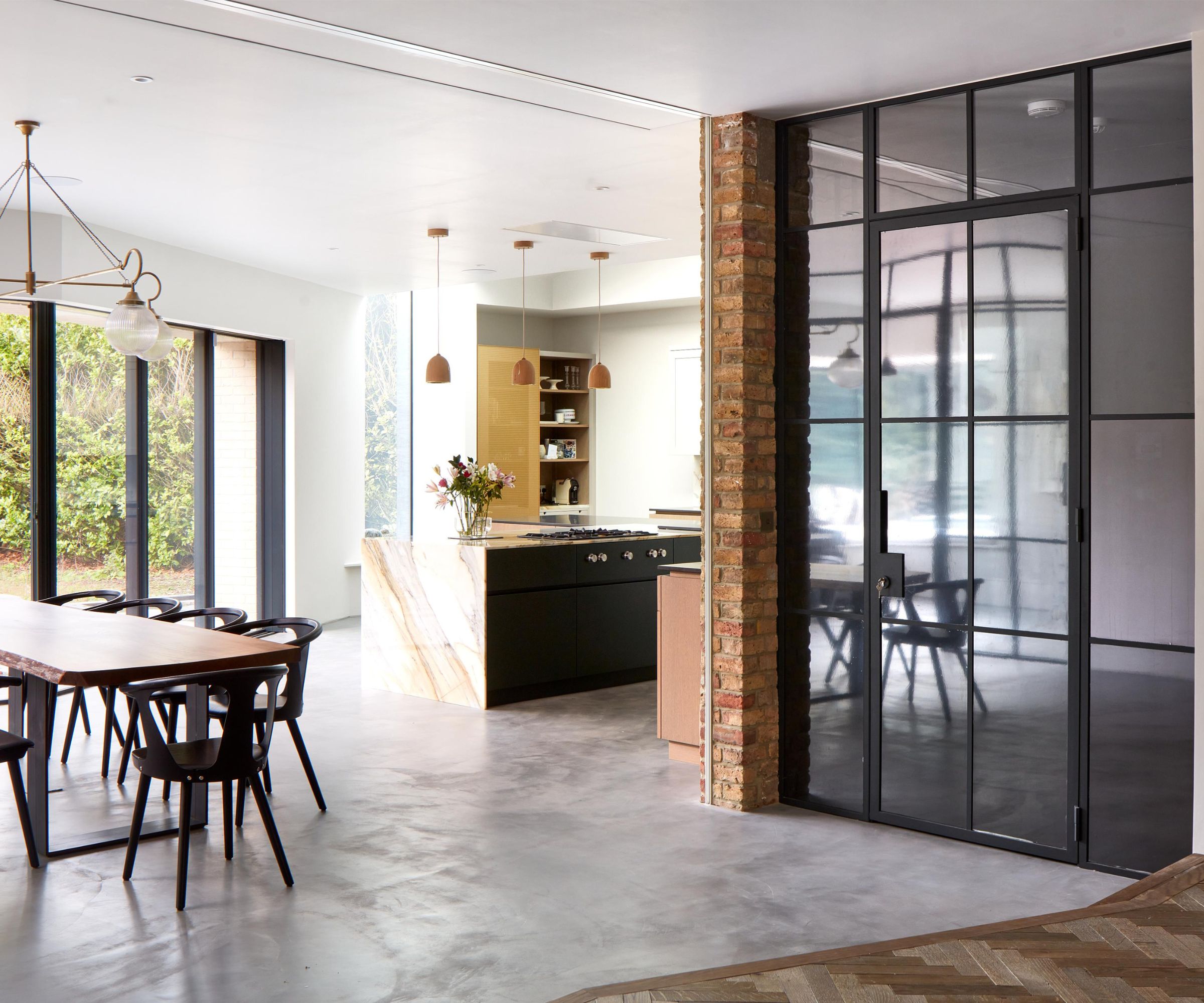
Scenario Architecture’s own projects highlight how versatile these concealed spaces can be. In the home pictured above, a steel-framed door leads to a beautifully concealed wine room – a clever twist on the traditional walk-in pantry that keeps bottles organised and accessible while maintaining the purity of the open-plan scheme.
And according to Ankory, this fits into a much broader shift in how we design kitchens today. “We are seeing two trends pulling in opposite directions. On one hand, a move towards minimalism, fully concealed kitchens that can ‘switch off’ in open-plan living. On the other, a return to proper back-of-house space, a second prep kitchen, a full larder, somewhere for wine storage and the everyday mess. Great design is often the negotiation between those contradictions, giving you the calm, uncluttered room you want to look at, and the generous, practical working space you need to live well.”

Ran co-founded Scenario Architecture in 2007. Combining deep technical expertise with a talent for problem-solving, he leads design delivery and continually explores new materials, tools and techniques to push architectural boundaries.
3. Turn narrow gaps into slim pull-outs

In many kitchens, it’s the narrow gaps and awkward slivers of space that hold the most untapped potential. Rather than leaving these areas unused, slim pull-out units or small drawers offer a brilliant way to make every inch work a little harder.
David Balko, CMO at Wren Kitchens explains: “Slim pull-outs are an incredibly smart way to use narrow or awkward gaps that would otherwise be wasted. Whether it’s spices, oils, baking trays, or cleaning products, these neatly fitted pull-outs ensure nothing becomes dead space.”
Often just 15cm wide, these pull-outs glide out smoothly, giving you complete visibility of their contents without disrupting the clean lines of your kitchen cabinetry – proof that concealed storage doesn’t have to be large-scale to make a difference to your work flow.

David Balko brings over 25 years of brand, design and client-side experience to his role as CMO at Wren Kitchens. With deep knowledge of kitchen retail, production and omnichannel strategy, he helps bring functional, aspirational kitchens to real homes
4. Rethink corner storage with modern mechanisms
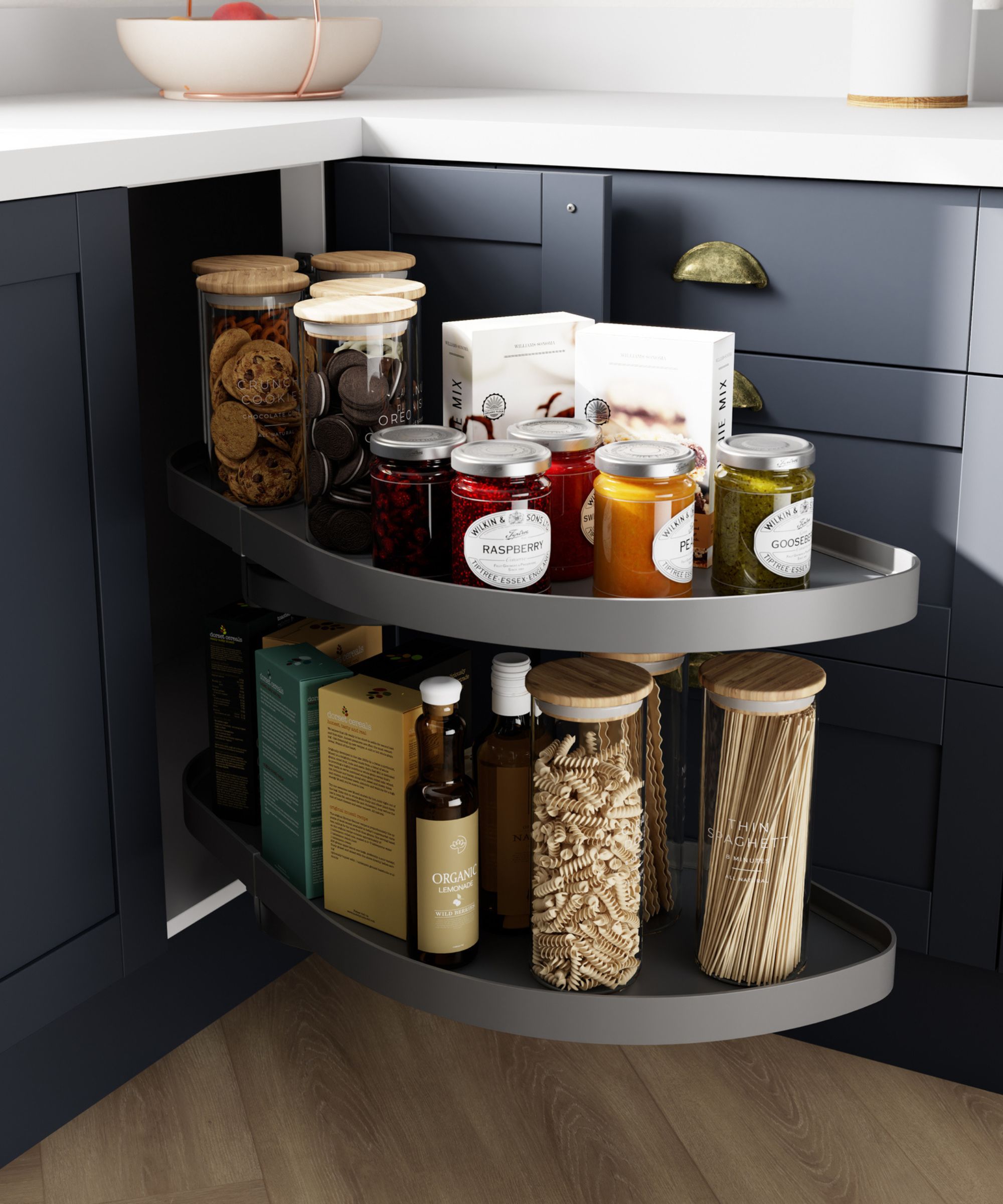
Corner cupboards are notoriously awkward, but modern mechanisms have completely changed what you can do with them. As Sebastian Aronowitz, founder of The London Kitchen Company, puts it: “Corners can be awkward to use well. In older or budget kitchens you’ll often find a corner cupboard with things stored in the farthest corner that haven’t been touched since the day the kitchen was fitted. You practically have to crawl inside to reach them.” It’s a familiar scenario, and exactly why updated hardware is worth considering.
He explains that today’s solutions go far beyond the old-fashioned lazy Susan. “Modern hardware offers plenty of helpful solutions. Le Mans pull-out trays, Magic Corners, carousels and even corner-shaped pull-out drawers all work well, as long as you use the better quality versions.”
These systems glide out smoothly, bringing the entire contents with them, so there’s no bending, reaching or guesswork involved.

Sebastian Aronowitz is the founder of The London Kitchen Company, known for his refined, design-led approach to creating functional, beautifully crafted kitchens tailored to how homeowners truly live and cook.
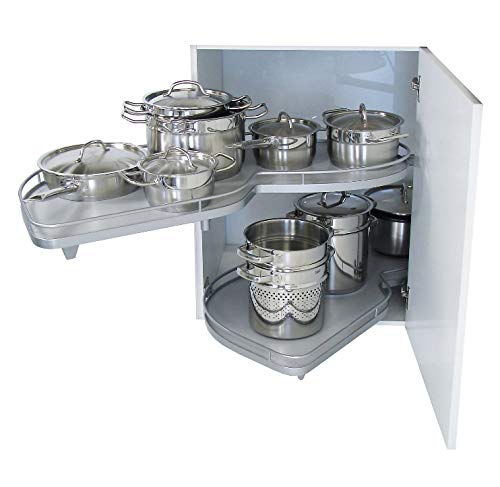
Kessebohmer Lemans Pull-Out Swivelling Tray System
This clever pull-out makes those impossible corner cupboards usable. The smooth, swing-out trays bring everything right to you, turning forgotten, hard-to-reach space into storage you’ll use every single day.
5. Introduce a freestanding pantry to keep worktops serene

If you love the idea of calm, clutter-free worktops but still rely on small kitchen appliances every day, a freestanding pantry is one of the most effective concealed storage features you can add to your home. Tucked behind doors, it offers a discreet home for the toaster, coffee machine or stand mixer (those practical devices you want close at hand but not permanently on display).
“Freestanding pantries are perfect for hiding away small appliances,” explains Josie Medved, design manager at Symphony and Laura Ashley Fitted Kitchens. “Small pull-out base units with wirework are ideal near the hob to conceal frequently used herbs, spices, oils and vinegar bottles. The same unit can also be used near the sink for cleaning supplies.”
According to Josie, the key to their success is in how these pantries are disguised. Matching door fronts allow the cupboard to blend into the wider run of cabinetry, while bi-fold doors or lift-up mechanisms ensure it reads as a simple, uninterrupted cabinet.
As design manager for Symphony Fitted Furniture, Josie champions smart, flexible kitchen storage solutions, from fitted joinery to clever hideaway bins, designed to enhance everyday life.
Shop Freestanding Pantries & Larders
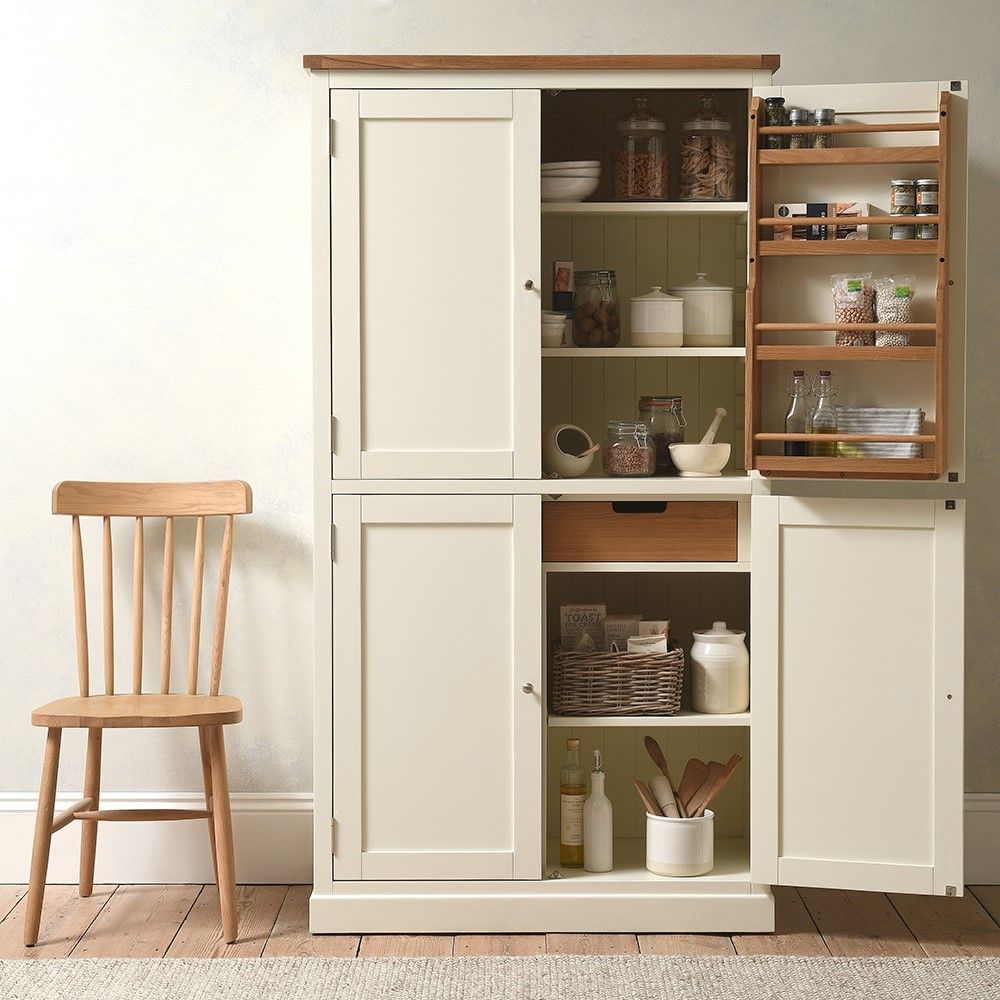
Simply Cotswold Classic Cream Double Larder
A beautiful statement piece for any kitchen, perfect for displaying dried goods, jars and spices, while keeping potatoes and onions tucked away in its drawers.
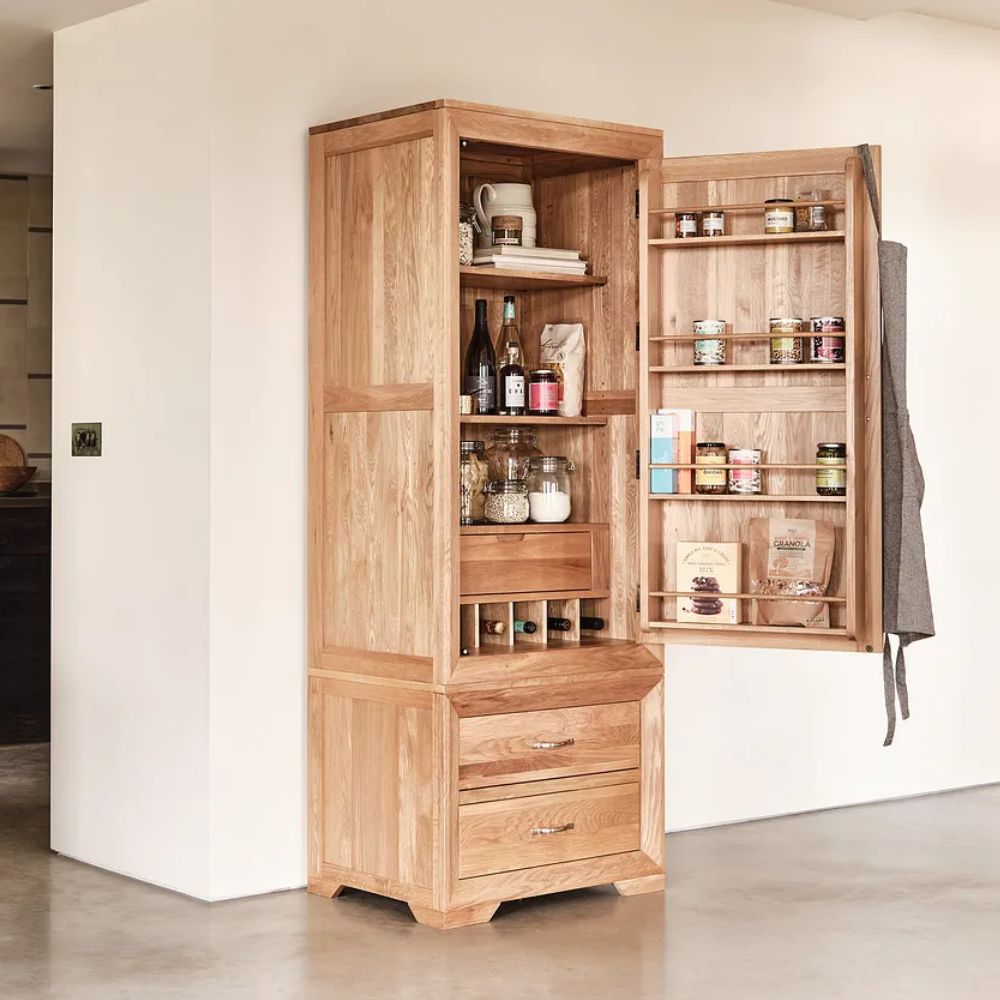
Bevel Natural Solid Oak Slim Larder
The classically designed Bevel Range combines the traditional charm of good quality natural solid oak with a sleek, refined modern styling.
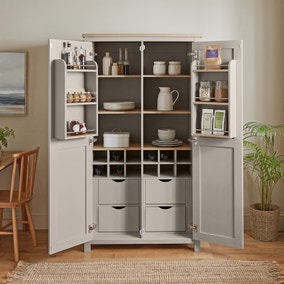
Olney Kitchen Larder Unit
This unit offers an extensive storage area that ensures your kitchen remains organised and functional. It features two storage shelves on the doors, ideal for accommodating frequently used items.
6. Conceal bins within a dedicated integrated system
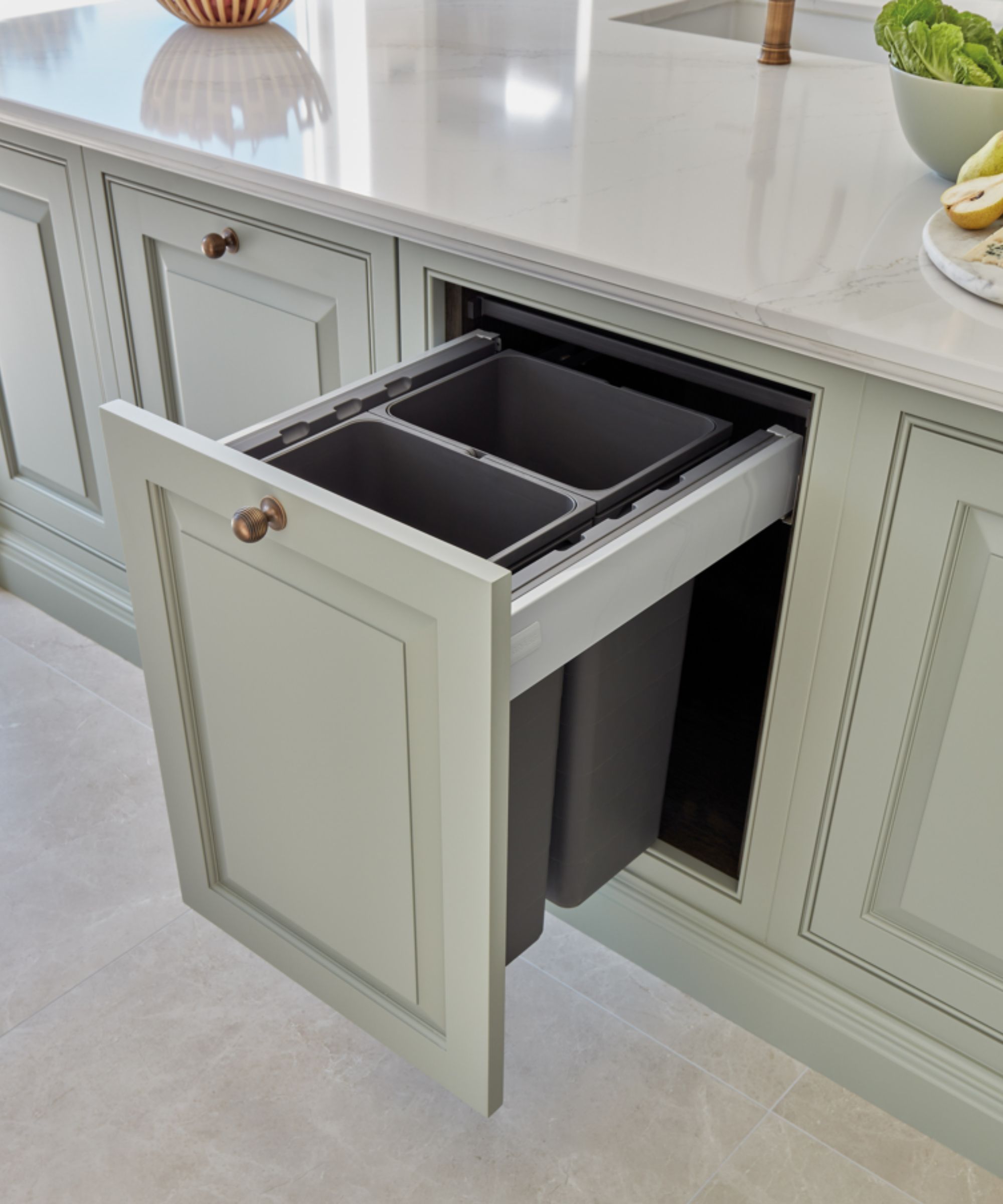
No matter how beautiful a kitchen is, a visible bin can quickly disrupt the calm. That’s why integrated kitchen bins have become a popular feature in many homes.
“Concealed bins are an essential part of a modern kitchen,” explains David Balko. “A pull-out bin hidden behind a matching frontal keeps the room visually seamless and decluttered.”
But placement, he adds, is just as important as concealment. “For maximum efficiency, position the bin below your main prep area so it becomes a natural part of your cooking flow.” This ensures scraps and peelings can be tidied away in one easy movement, without walking waste from one end of the kitchen to the other.
7. Use secret drawers for layered organisation
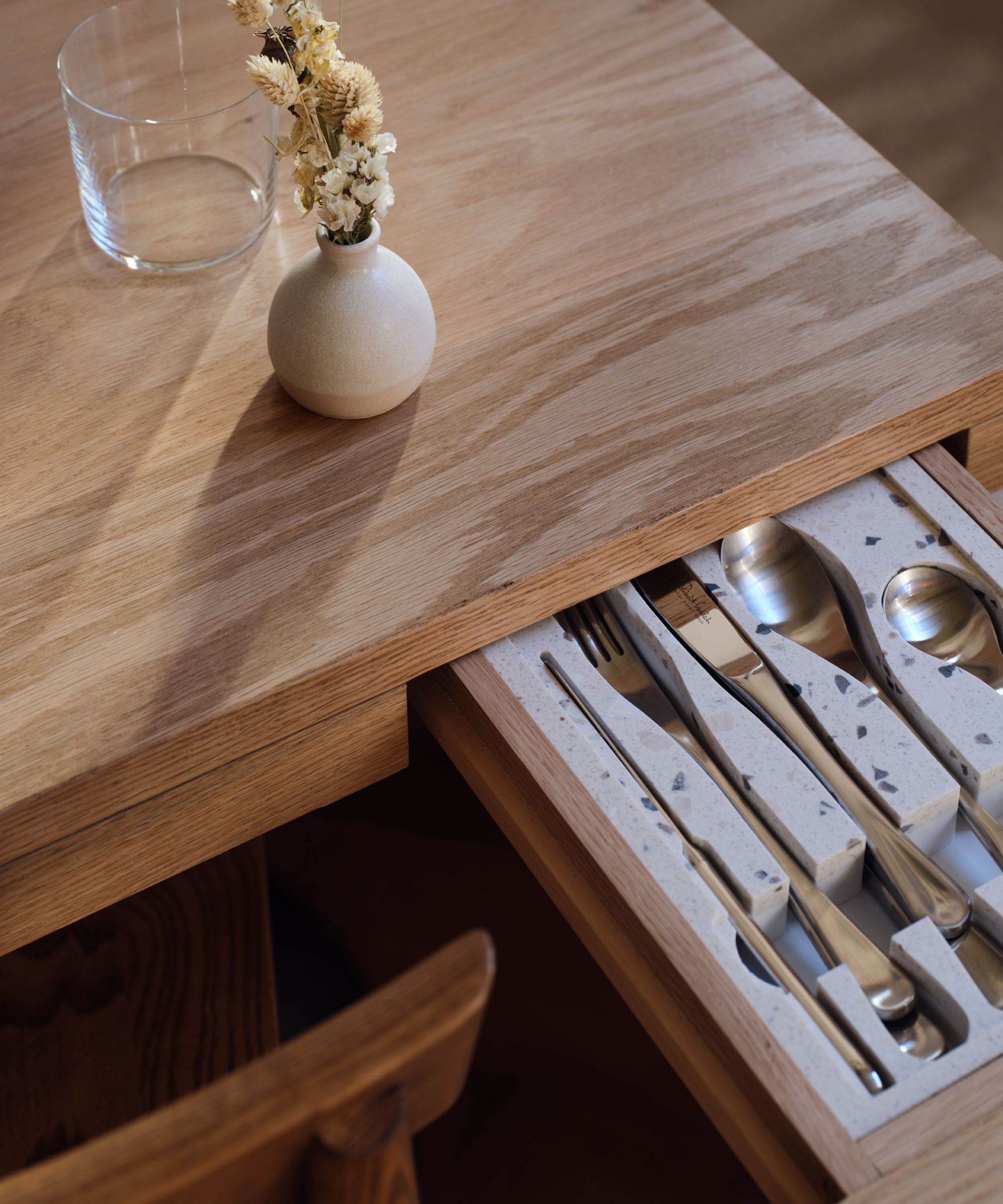
Secret drawers are a brilliant design touch that can make a kitchen feel much more streamlined. David Balko from Wren Kitchens explains: “Secret drawers, which are hidden within deeper pan drawers, are an excellent way to add extra organisation without altering the external look of the cabinetry. They’re ideal for smaller utensils, wraps and foils, or baking accessories that need quick access but don’t belong on show.”
These hidden compartments are becoming a go-to for designers, especially in kitchens that want a clean, minimal feel without losing practicality. Everything has its place, and you spend far less time rummaging for the things that always sink to the bottom.
And if you want to take the idea a step further, bespoke cutlery drawers – like the one pictured above – are a lovely way to make everyday storage feel more intentional. Tailored sections keep your utensils neatly lined up, and the whole drawer just works harder without shouting about it. It’s simple, useful and quietly satisfying (exactly what good kitchen storage should be).
8. Build in shallow storage to keep lines light and uncluttered

Shallow shelving is a brilliantly efficient way to add storage without overwhelming a room. Because these types of shelves don’t project far into the space, they’re ideal for storing glassware, mugs or smaller everyday items in places where full-depth cabinetry would feel bulky, such as the back of an island, beside a doorway or along a narrow return.
As this design shows, shallow shelves can be concealed behind doors, which means you get all the convenience of accessible storage without disrupting the kitchen’s clean lines. When closed, the kitchen island reads as a simple, uninterrupted surface; when open, it reveals a neatly organised bank of shelves that makes use of what would otherwise be a shallow void.
9. Introduce hidden storage within the kitchen island

The outward-facing side of a kitchen island is prime real estate for concealed storage, yet it’s a spot so many kitchens leave untouched. Building hidden cupboards or drawers into this area instantly levels up your kitchen island storage, giving you space for items you don’t reach for every day, such as serving pieces, table linens or extra glassware.
In the Searle Taylor Kitchens design shown above, what looks like a simple bank of drawers actually conceals a fully integrated mini fridge. Because the door front matches the surrounding cabinetry, it blends in until you open it. It’s a great example of how hardworking kitchen island storage can stay completely under the radar.
10. Tuck practical details behind discreet panels

Because islands tend to be the visual anchor of a kitchen, it makes sense to keep the surfaces clean and the details subtle. One clever way to do that is by hiding the more functional elements like charging points, routers or shut-off valves, behind a small, integrated panel. When designed well, these doors sit flush with the island, so you barely notice them at all.
In the design shown above a neat little hatch is built right into the timber, offering quick access without interrupting the overall aesthetic. This is really effective, as the island stays looking beautifully streamlined, while all the practical bits remain hidden yet easy to reach.
11. Choose a full-height pull-out pantry

“Pull-out larders make the most of tall, narrow spaces and give you full visibility of what you have, so items don’t end up lost at the back of a cupboard,” explains Steve Larkin, CEO of Lark & Larks. “They’re a really efficient alternative to standard shelving, particularly if you like to keep your ingredients well organised but hidden.”
And he’s right – a full-height pull-out pantry is one of the easiest upgrades for a more organised kitchen. It looks like a regular tall cabinet from the outside, but once you open it, the whole rack slides forward so you can see everything at a glance. No more hunting for sauces or discovering three open bags of pasta.

Steven Larkin co-founded Lark & Larks in 2003 and leads its bespoke kitchen and bedroom furniture business. With decades of hands-on experience, he helps deliver custom, high-quality kitchen carcasses and tailored design solutions across the UK.
12. Conceal everyday appliances to keep your counters clean

Unless you’re lucky enough to have a separate laundry room or utility room, larger appliances can quickly become the biggest sources of visual clutter in a kitchen. Hiding them behind matching cabinetry makes a huge difference to how calm and streamlined the space feels. Instead of letting washing machines, tumble dryers or small countertop appliances sit permanently on show, tucking them behind panelled doors keeps the whole room looking pulled together.
Josie Medved, design manager at Laura Ashley Fitted Kitchens, explains just how effective this can be: “Try to conceal appliances with panels that match your cabinets so they disappear.” Built-in options like appliance cupboards, lift-up doors or slim counter-level garages let you keep everything exactly where you need it, without allowing bulky machines to take over the workspace.
13. When designing a kitchen from scratch, consider installing bespoke pop-up storage
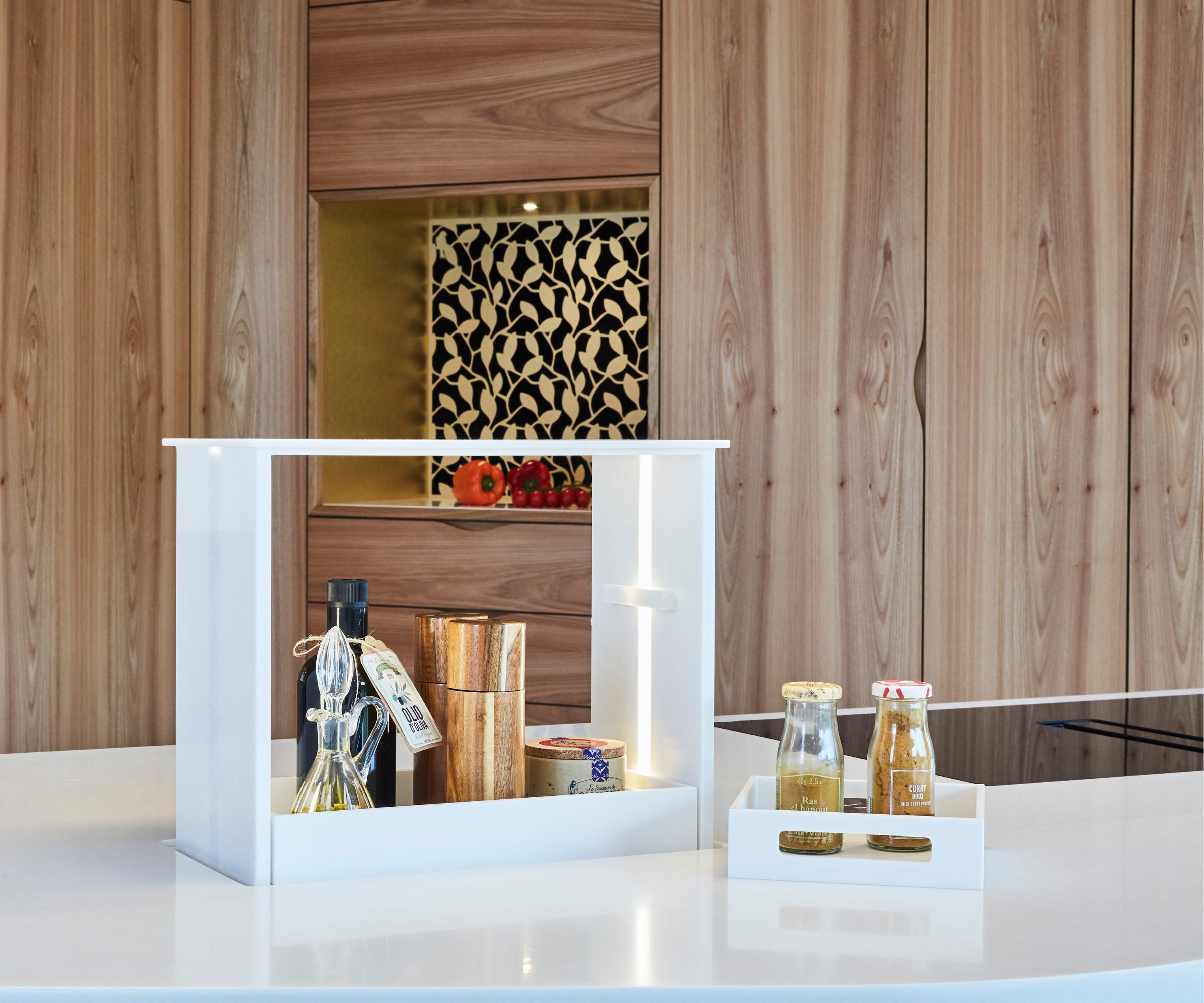
Bespoke pop-up storage is one of the smartest ways to keep worktops looking clean without sacrificing convenience. This hidden unit design by LX Hausys lifts from the island only when you need it, giving quick access to oils, spices and everyday essentials. Once you’re done, it disappears back into the counter, leaving the surface clear again. It’s a simple, space-savvy detail but one that makes a noticeable difference to how tidy and functional your kitchen island feels.
14. Carve out concealed spaces within your kitchen seating
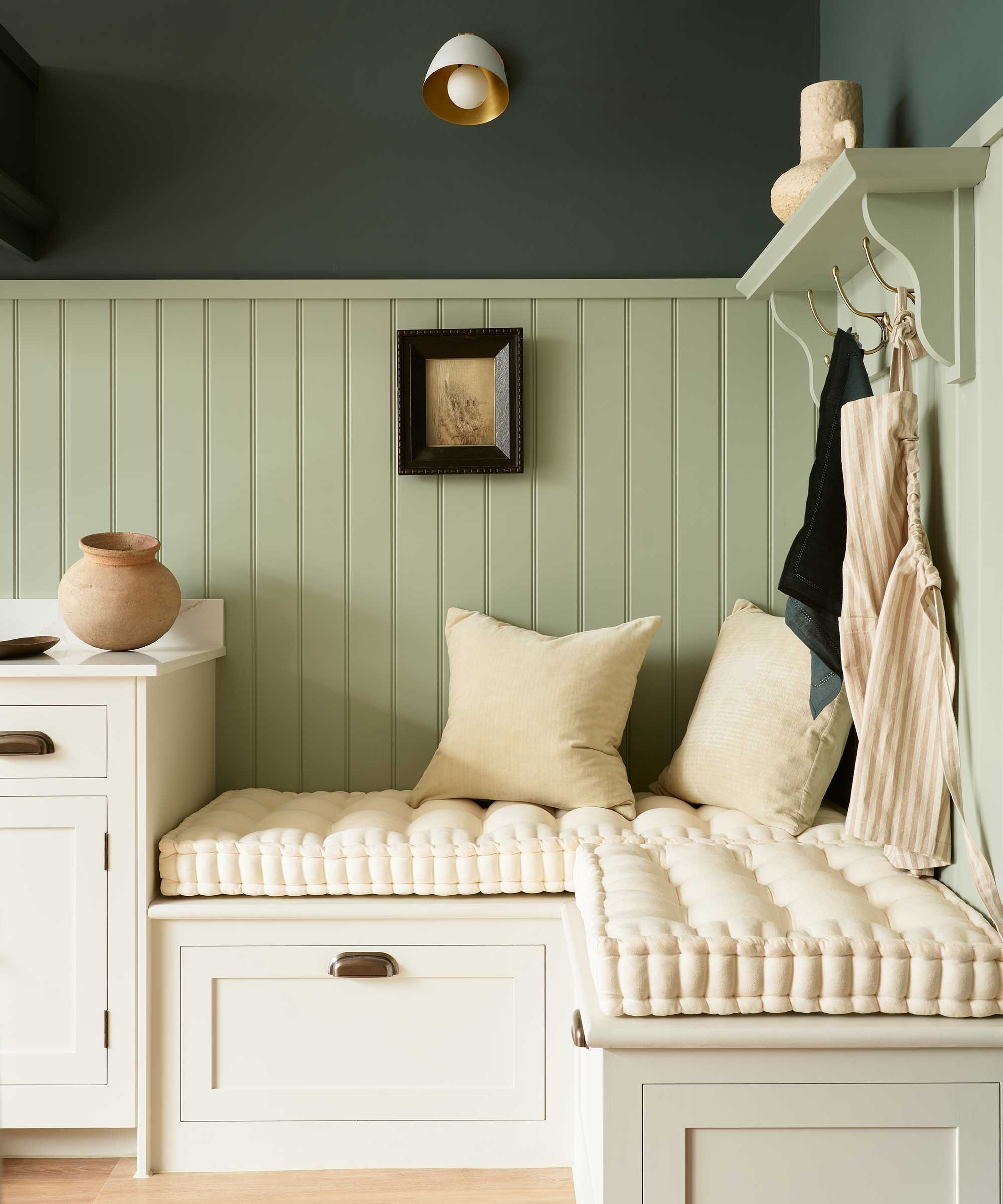
Not all hidden storage has to live inside your cabinetry. In fact, some of the most useful spaces in a kitchen are the ones you might not think about at first. Banquette benches are especially good for this because they offer roomy, out-of-sight storage without taking up any extra floor space.
Al Bruce, director of Olive & Barr, says it best: “Banquette seating is the perfect place for hidden storage. You can incorporate storage beneath the seating by adding lift-up seats or pull-out drawers. This maximises functionality which is especially important for compact kitchens.”
It’s an easy way to stash things like table linens, board games, serving platters or even kids’ craft supplies, and because everything tucks away neatly, the dining area still feels calm and inviting.

Founder Al Bruce began his illustrious career 25 years ago studying to be a cabinet maker at college. With a natural flair for design and a deep passion for the industry, Al finally opened his own Shaker kitchen company, Olive & Barr in 2018.
A kitchen remodel is the perfect chance to rethink how your space really works. Adding clever concealed storage like this keeps the room feeling calmer, cleaner and so much easier to live with.
View the original article and our Inspiration here
Leave a Reply